
Caring for My Mom Through Dementia and Decline
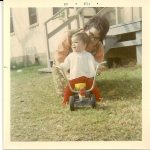
Alexis
State: California
Congressional District:
Diseases
Issues and Challenges
Alexis has encountered: Caregiving
My Story
My mother died in May 2020, two months after being diagnosed with dementia.
I helped care for my mom in the last couple of years of her life. I was often confronted with situations I could not have imagined, such as having to race over to the assisted living facility to cut my mom’s nails after she scratched the nurses. I made decisions I never wanted to make: every trip for a medical appointment exhausted her, and I had to determine what absolutely had to get done and what didn’t.
In the last years of her life, my mother became legally blind in addition to having cataracts. Surgery wasn’t an option; she wasn’t strong enough. She had non-insulin-dependent diabetes, which she had successfully managed for many years. Her feet became swollen, and the skin was dry and cracked; I don’t know if diabetes played a role in the deterioration of her feet.
My mom had been reasonably physically active for most of her adult life (swimming, tai chi), but she had struggled, since childhood, with overeating. The physical weight she carried destroyed her knees: she went from a cane to a walker to a wheelchair. I learned about ADLs (Activities of Daily Living) when she became unable to dress or toilet herself. Because of her size, I had to purchase adult diapers online (not available in stores).
Even before she used a walker, due to her limited mobility, she could not get into a car. I signed her up for two local, reduced-cost transportation options. One of them – ironically – required her to appear in person at a facility about 15 miles away in order to be approved for the service. We also used, on more than one occasion, the non-emergency, more expensive medical transportation options (like the time she fell, and I had to scramble to get her to a doctor’s office quickly).
It was clear to me, my sister, and my husband that something (beyond the physical) was really wrong: my mom would tell us to take the leftover restaurant food out of the fridge because she had gone out for lunch (she hadn’t) or that she didn’t understand a voicemail that was left; could I listen to it? My mother had a master's in journalism and had worked as a reporter and editor for many years. She had been a single mother and active in 1970s feminist groups.
I finally was able to get, in the fall of 2019, an appointment with a geriatrician and social worker to have my mom evaluated for dementia. It was a “good” day for my mom: the diagnosis was depression, not dementia.
After that appointment, I investigated other health insurance options, which included getting a crash course in Medicare. In January 2020, my mother switched to a new health insurance plan.
Meanwhile, she continued to deteriorate; her hands started shaking, and it became very difficult for her to feed herself. She had two 10-day hospital stays, separated by time in skilled nursing and a brief return to assisted living. All of this took place at the outset of the pandemic, so we could not see her. During her second hospital stay, she became unable to swallow. Following our mother’s wishes (she had an Advanced Medical Directive), my sister and I made the heartbreaking decision for hospice. Our mother died 10 days later.
It's been four years, and I am still learning how to live with the grief I carry and how to live without my mom. At one point, maybe in February 2020, when we were leaving a medical appointment and waiting for our transportation, my mom said, “I could never do what you’re doing,” to which I replied that of course she could, and she had. This was a precious glimpse that who my mom had always been was still in there.
I tried to care for my mom as she had always cared for me. I feel guilty that I couldn’t save her, but in my head, I hear her say, “Lex, give it a rest. You did your best, and it’s okay.”
My Motivation and Inspiration
My mom.
Share This Story
Get the most from every Story
Find A Compelling Patient Story
Share it on social media.
Share Your Story On Our Network
Share your insights, challenges and what keeps you going.