
A Second Chance: My Journey with MDS and Stem Cell Transplant

Maureen
State: Georgia
Congressional District:
Diseases
Blood Disease, Cancer
Issues and Challenges
Maureen has encountered: Rare / Underserved Disease, Invisible Illness, Lodging
My Story
My journey with Myelodysplastic Syndrome (MDS), a type of bone marrow failure and blood cancer, began in the fall of 2009. My general practitioner noticed my platelets were low and referred me to a local hematologist/oncologist. This doctor recommended several tests, including a bone marrow biopsy, but since I had no symptoms, I opted to just monitor my platelet levels for the time being. This went on for many years until my blood work came back with words like "target cells" and other daunting terms, so I decided to move forward with the bone marrow biopsy in May 2018. The results came back as MDS, and the fight against this invisible illness was about to begin.
My diagnosis spurred a need for information, so I began learning all I could about the disease and available treatment options. I began seeing an MDS specialist in Atlanta, and he placed me on what we call "watch and wait." Watch and wait, also called active surveillance, is a treatment approach where doctors delay treatment and closely monitor the patient's condition without immediate intervention. My doctor told me from the beginning, though, that it was not "if" but "when" I would need an allogeneic stem cell transplant, requiring cells from a donor.
I became active in the MDS community by attending and leading patient support groups, participating in research studies, and attending patient forums. An opportunity arose for me to participate in a clinical trial for an oral form of the already-available IV chemotherapy drug called azacitidine (a common treatment for MDS). I felt so thankful to participate in this study, as I could never afford a drug like this out-of-pocket, and my treatment-related expenses would have mounted. My doctor hoped that this drug might provide many years without disease progression or possibly even remission. However, after participating in the study for approximately two years, I saw no noteworthy results and withdrew from the study.
During this time, we continually talked about the need for a transplant, but I still was not ready to pursue that route, as I essentially felt pretty well with very minor symptoms. However, as my white blood cell numbers also dropped and my risk of infection grew, I agreed to have a transplant consult with a specialist who informed me that while I did not need a transplant imminently, the time was coming.
Again, we played watch and wait for another year until my doctor called me one day regarding my lab results and told me that he would start looking for a donor for me for when I felt "ready." I hung up the phone and started crying as I realized that my bone marrow was truly failing and I really was going to die. I still felt hesitant about receiving a transplant due to the risks the procedure involved, but in the end, I decided to move forward. If not, I faced certain death—it would just be a matter of time.
A sibling offers one's best hope for a donor match, but as my only sister had passed away, I would need another donor. If a sibling does not match perfectly, doctors begin the search for an "unrelated" donor in the donor registry. I felt so fortunate that the registry contained several exact matches for me, and it was just a matter of which donor responded the quickest and could complete the additional testing in the most timely manner. I officially decided to move forward with the transplant at the end of November and received my donor cells on January 12, 2024—a most momentous day that signaled the beginning of my new life.
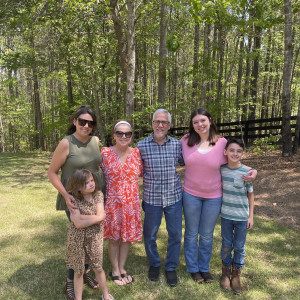
I truly believe I would not be alive today if I had not chosen to receive a transplant and had an available donor. As a mother and stepmother of five children and grandmother of eight, I remain forever thankful to my donor, whose generosity has given me a second chance at life and more time to spend with my family.
Maintaining (and funding) an international donor registry, such as NMDP, which the C.W. Bill Young Cell Transplantation Program authorizes, carries utmost importance so that those who need transplants can find the best match to make it through the procedure successfully with better odds for long-term survival. We also need federal funding to advance access to transplant and for the National Cord Blood Inventory (NCBI) to collect cord blood donations. Stem cell and bone marrow donors need job-protected leave and attendance policy changes. Health insurance payers need to reduce their turnaround time for urgently needed care through prior authorization reform. And while these requests require significant action, we must do so much more to expand access and remove barriers to life-saving cellular therapies.
My Motivation and Inspiration
My motivation and inspiration primarily stem from my beliefs as a Christian. I believe that through my trials, I am able and called to help others. Additionally, an allogeneic stem cell transplant tends to clarify what is most important in one’s life, what one’s values are. I have always had a desire to help others, and even though my MDS/transplant experience went very smoothly with access to treatment, having an unrelated exact match for a donor, the appropriate medications at a reasonable cost, and insurance coverage and payment, I know this is not the case for everyone and this is where advocacy becomes important.
Share This Story
Get the most from every Story
Find A Compelling Patient Story
Share it on social media.
Share Your Story On Our Network
Share your insights, challenges and what keeps you going.